Doctoral Research
Urbanism of Exclusion: Tourism-driven Displacement in Accra, Ghana
Dissertation Committee: Faranak Miraftab (Chair), Andrew Greenlee, Sian Butcher, Russell Tyran
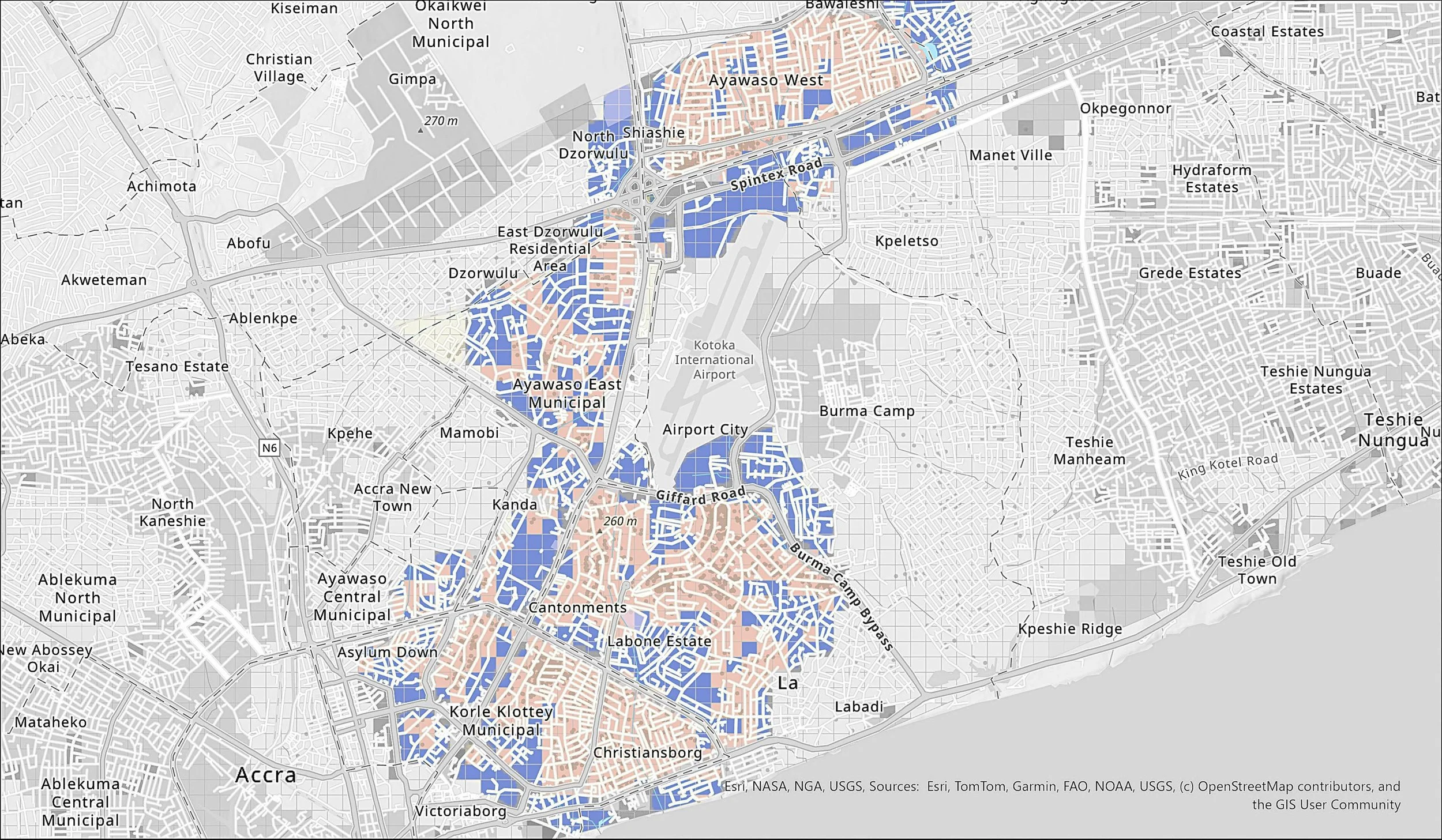
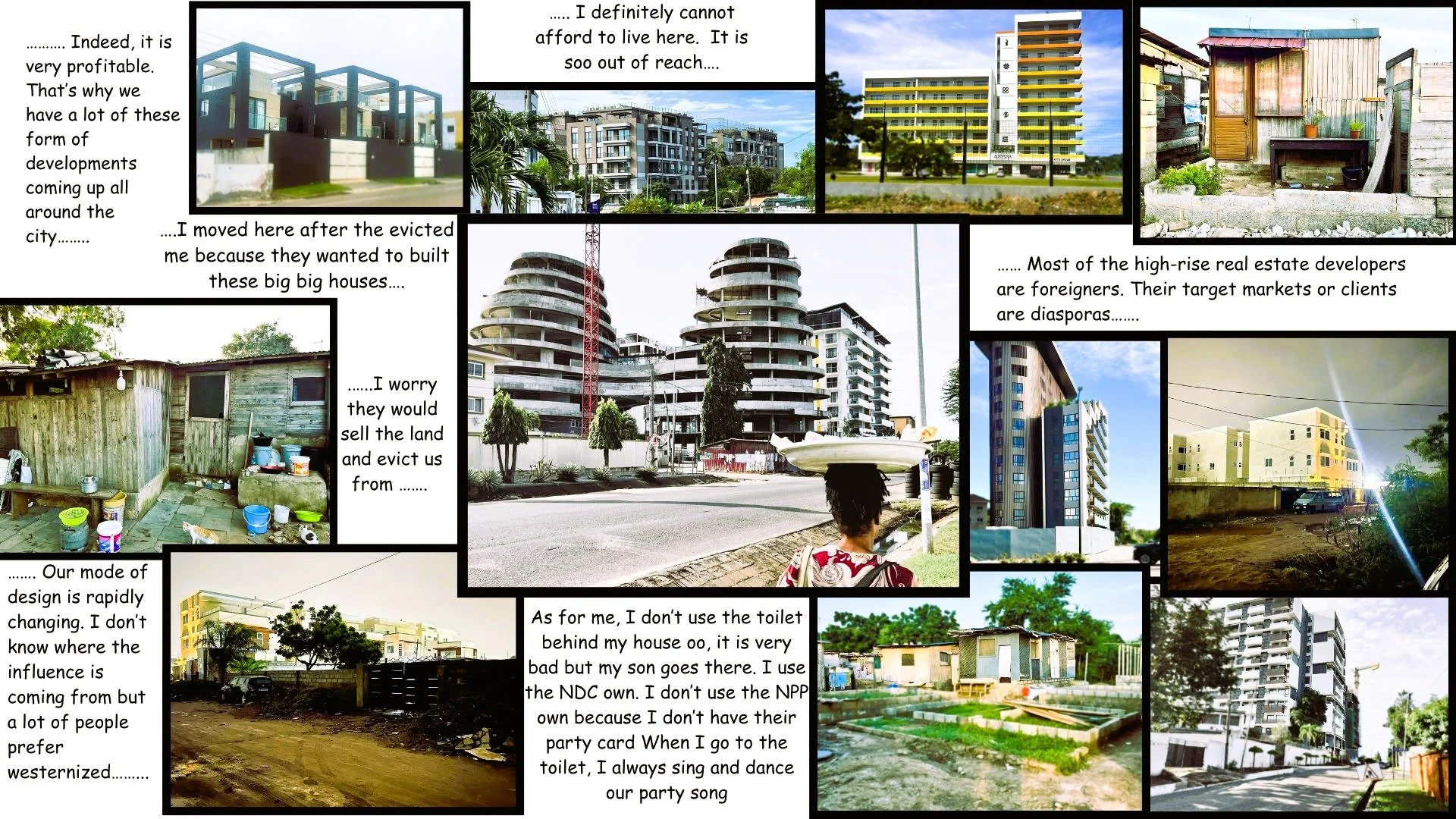
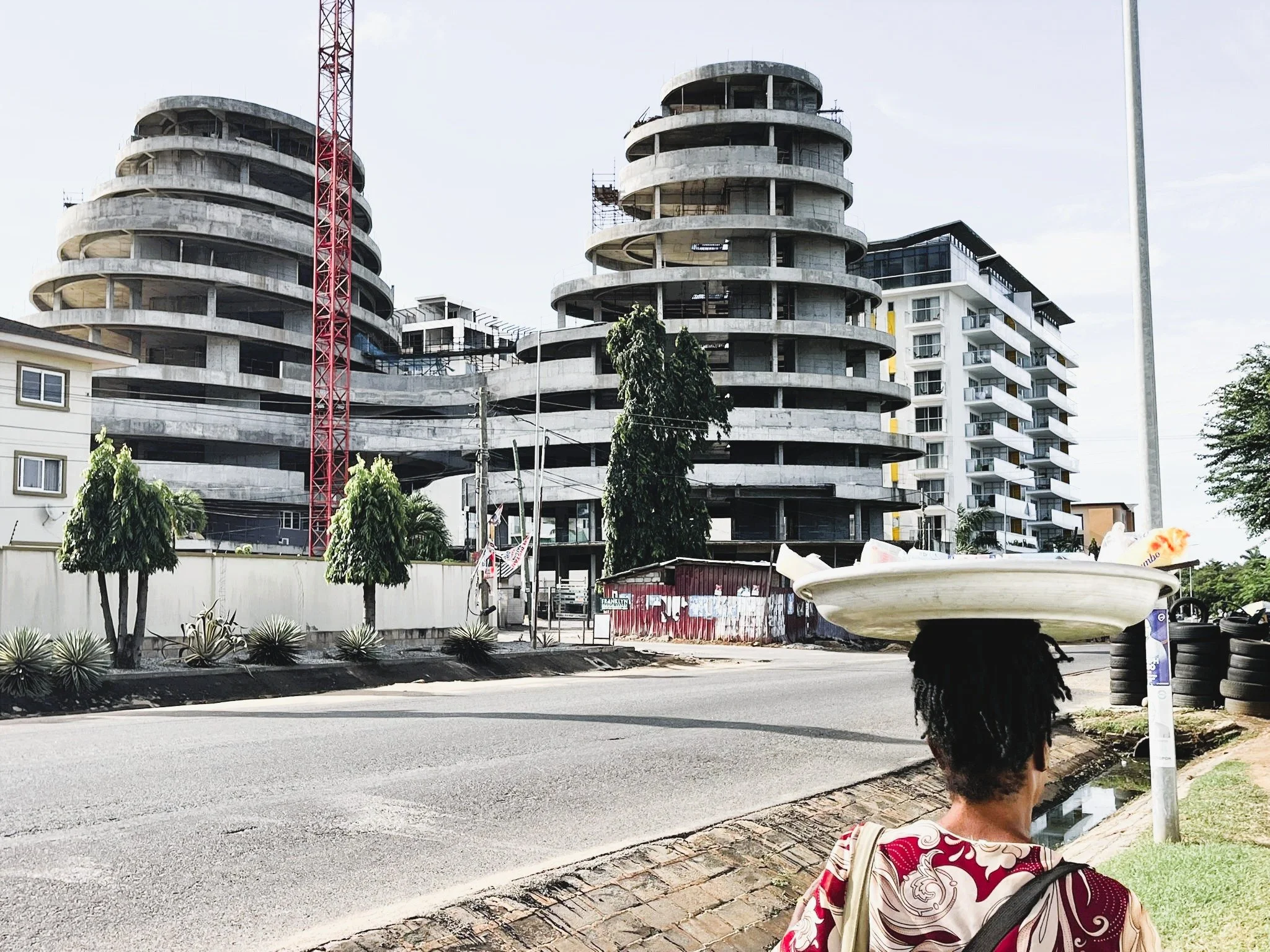
Using an integrated mixed-methods design that combines geospatial and quantitative analysis with qualitative fieldwork, I investigate, on the one hand, how the Ghanaian state facilitated the rapid expansion of luxury Short-term (STR) development. On the other hand, I examine the housing and labor implications for low-income residents, specifically domestic workers whose in(visible) labor sustains the STR industry. My findings indicate that, first, the state, through the Year of Return (2019) tourism initiative, investment incentives for transnational investors, and selective infrastructure provision in high-end enclaves, created an enabling environment for a high-end real estate boom. Luxury STR developments emerged as a central mechanism for capital accumulation, as developers leveraged anticipated yearly tourism demand. Secondly, while this growth generates returns for investors, it has intensified housing unaffordability and expanded informal settlements within and adjacent to these luxury developments. It also deepened the housing and labor precarity of domestic workers. Domestic workers navigate insecure housing tenure, sanitation, infrastructure inequality, and other precarious housing conditions. Despite these limitations, domestic workers mobilize feminist ethics of care to reproduce life within and against this tourism-driven urbanism. Thirdly, I center the informal settlement these domestic workers and other low-income displaced residents inhabit and demonstrate how informal settlements are embedded within, and can reproduce the dynamics of commodification. The settlement embodies the paradox of precarity within commodified housing: despite insecure housing, land tenure, and infrastructure limitations, informal housing is both costly and risky. Residents invest significant portions of their limited incomes into building temporary shacks, yet face constant eviction threats.
Master’s Research (Planning)
Learning from Grassroots Women Resistance to Inform an Inclusive and Humane Urbanism
List of Publications
Advisor: Faranak Miraftab
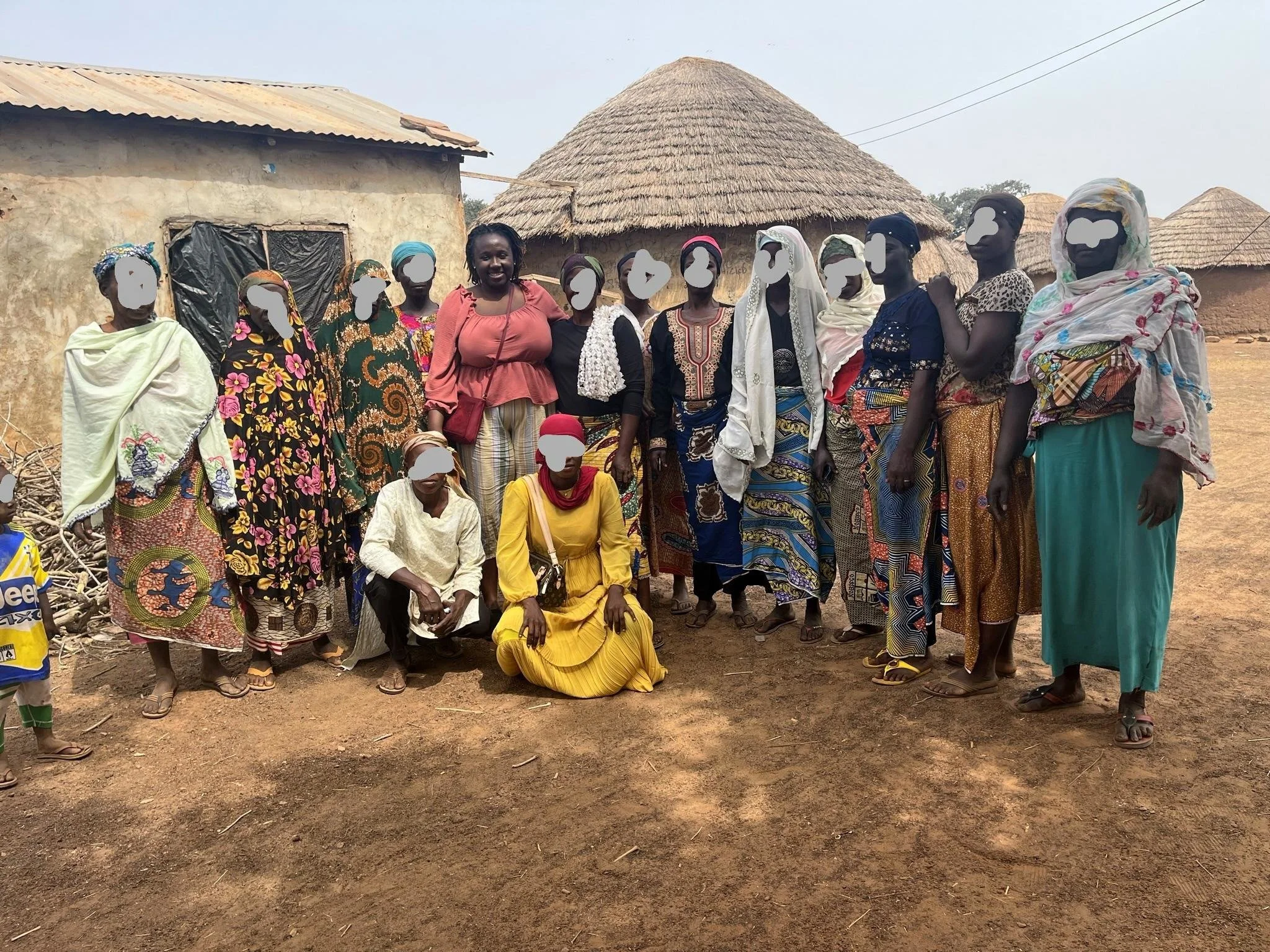
My thesis explores how women in Africa resist socio-economic alienation using theories of African feminisms to explain unique forms of grassroots and collective actions. I argue that first, reciprocity of care and acknowledging local knowledge serve as bases for resisting alienation. Secondly, reciprocity of care is inherent in the values and practices of many indigenous or ethnic groups. Thirdly, these values contradict neoliberal philosophy and practice of individualism, competition and privatization. More importantly, exploring how women collectively resist alienation entails identifying practices of resistance rooted in shared histories, cultures, and values which African-feminisms emphasizes. In contrast to Western feminist thought, African feminisms acknowledge the contextual differences between the western world and the continent, and seek an end to the oppression and marginalization of women by reworking African histories, cultures, and values. Through interviews with African feminist scholars, activists and focus group discussions with women in Northern Ghana, I place these women’s voices in scholarly conversation with feminist scholars who argue that, contrary to Western notions, women possess inherent roles in the reproduction, production and distribution of power and wealth in African societies. This accounts for their continuous resistance to exclusion and marginalization in the face of patriarchy, colonialism, and capitalism. More so, engaging with and learning from indigenous knowledge is crucial for building an inclusive urbanism.
Forthcoming
Article: Feminisms that Feed Us: African Feminist Ethics, Everyday Resistance, and the Futures of Development
Janet Husunukpe (Forthcoming)
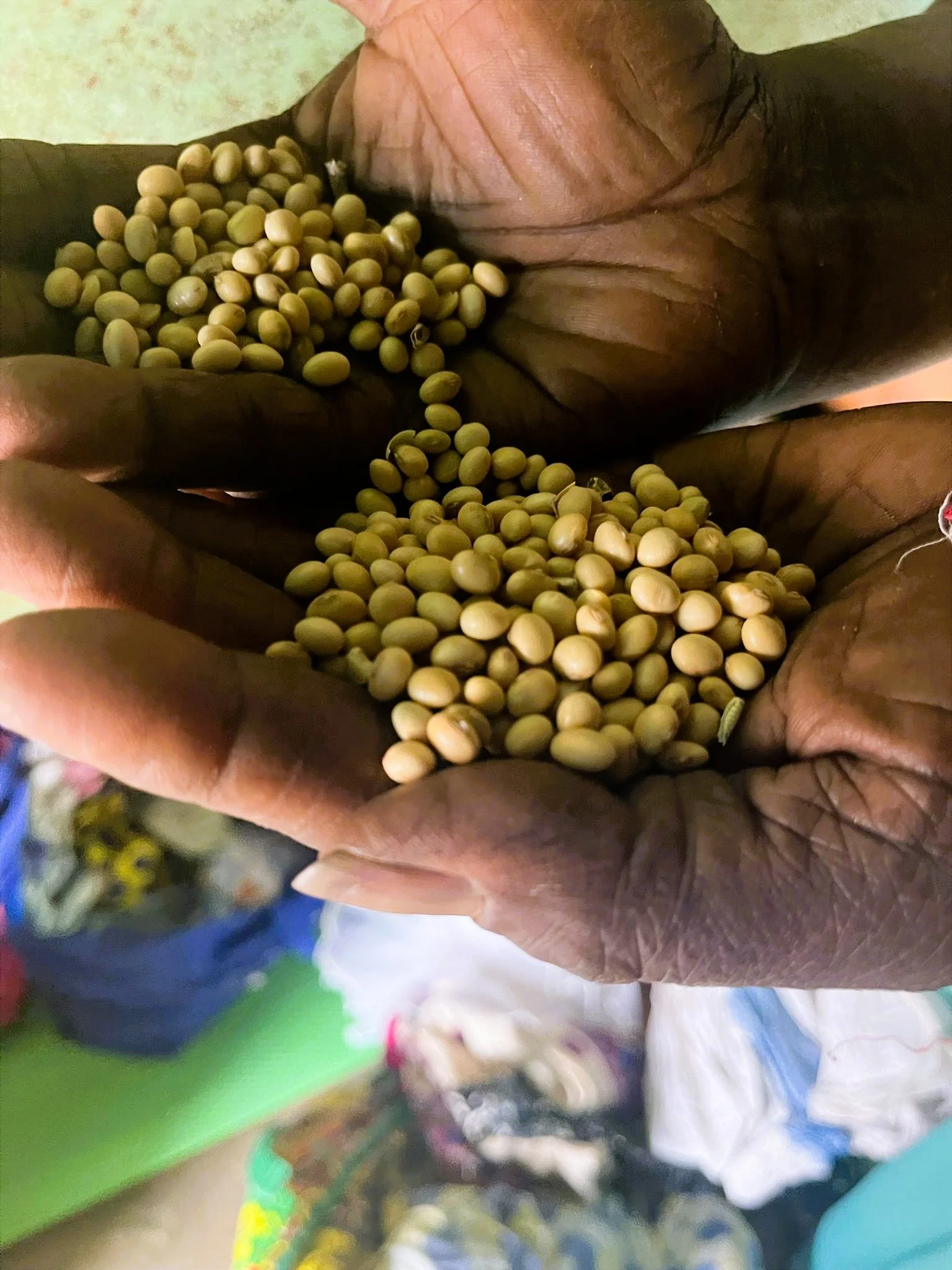
This paper centres the voices of grassroots women, exploring their role in socio-economic development through resistance strategies rooted in indigenous knowledge and ethics of reciprocity. Drawing on empirical engagement with grassroots women and activists in Northern Ghana as well as interviews with feminist scholars, I argue that ethics of reciprocity and acknowledging local knowledge are central to their resistance. Secondly, their resistance practices exemplify how agency is exercised in challenging socio-economic structures, and embodies the principles of African feminism and feminist ethics, principles rooted in local context and critically relevant for broader feminist theorizing and praxis. Thirdly, their experiences illuminate the tensions between external development frameworks and local resistance practices, highlighting the complexities of grassroots-led socio-economic transformation. Exploring how women collectively resist alienation entails identifying contextual practices of resistance rooted in shared histories, cultures and values which African feminisms emphasize. By attending to the material and kinship economies that sustain life, I position grassroots women’s organizing as a crucial site for reimagining the futures. These feminist practices feed us not only materially, but epistemologically—offering visions of survival that exceed the limits of mainstream development thought.
Article: From State-led Tourism to Real Estate Investment: Remaking Accra’s Speculative Urban Frontier.
Janet Husunukpe (Forthcoming)
This article examines how Ghana’s Year of Return and Beyond the Return diaspora tourism initiatives constitute a form of state-led investment strategy that has restructured Accra’s housing landscape. By positioning Accra as an investment frontier for diasporic Ghanaians and tourists, the Ghanaian state mobilized heritage and belonging as economic strategy and produced the conditions for tourism-driven real estate speculation to flourish. Within this state-enabled environment, Short-term rental developments (STR) emerged as the key mechanism translating tourism demand into speculative urban restructuring. Since 2019, STR developments have proliferated across the city, and are over 500 percent more likely to be developed than any other housing typology. This investment shift intensifies Accra’s housing affordability crisis and reorients urban development towards transnational accumulation. Drawing on geospatial and quantitative analysis of housing development patterns, complemented by document analysis and stakeholder interviews, this study conceptualizes state-led tourism-driven speculative urbanism. It demonstrates how diaspora engagement becomes a vehicle for reorganizing urban space around transnational real estate capital, thereby deepening housing unaffordability.
Articles:
· Husunukpe, J. A. (2025). Feminisms that feed us: African feminist ethics, everyday resistance, and the futures of development. Feminist Africa, 6(3), 12-41.
· Husunukpe, J. (Revised and Submitted). "From State-led Tourism to Real Estate Investment: Remaking Accra's Speculative Urban Frontier." Journal of Urban Affairs.
· Husunukpe, J. & Soma, H. (in progress, submit by June 2026). "Feminist Planning from Below: Grassroots Practices in Ghana’s Informal Economy.” Intended for Planning Theory.
· Husunukpe, J. (in progress, submit by June 2026). The Phases and Faces of Urban Spaces. Intended for Journal of Visual Studies.
· Husunukpe, J. & Miraftab, F. (in progress). "Poop Politics: Centering Clientelism and Social Reproduction in Informal Settlements.” Intended for Gender, Place and Culture.
Conference Proceedings (Selected):
· Husunukpe, J. (April, 2026). African Feminist Ethics, Everyday Resistance and the Future of Development. From the Margins to the Centre: The Enduring Legacy of Dr. Mary Njeri Kinyanjui in African Development Studies. Nairobi, Kenya.
· Husunukpe, J. (April, 2026). The Year of Return and the Making of a Speculative Housing Economy: How the State Promotes Urban Inequality in Accra, Ghana. International Conference on Urban Affairs, Chicago, USA.
· Husunukpe, J. (March, 2026). Accumulation Through Care: Domestic Labor and Short-Term Rental Expansion in Accra. American Association of Geographers, San Francisco, USA.
· Husunukpe, J. (2024, November). Navigating Urban Transitions: Tourism-Driven Housing Investment in Ghana's 'Year of Return.’ American Collegiate Schools of Planning, Seattle, USA.
· Husunukpe, J. (2023, November). Centering African feminist practice in decolonial Discourse. Africa Studies Association, San Francisco, USA.
· Husunukpe, J (2019, June). Alternative Sources of Livelihood for Women and Youth in Ada Foah, Ghana. Global Youth Advancement Summit: Addressing Global Inequalities, Michigan State University, USA.
· “Enhancing the economic activities of female single parents at the Volta River-The case of Ada Foah, Ghana” World Bank Conference on Land and Poverty, USA 2019.